


Global Stainless Steel Production Rises 2.5% in Q1 2026 – A Positive Signal for the Stainless Steel Industry
In today’s industrial landscape, stainless steel plays an essential role in infrastructure, energy, manufacturing, and many key sectors. Recent data shows continued growth in global production, reflecting rising demand and highlighting important opportunities for businesses across the supply chain.
Global Stainless Steel Production Increases by 2.5% in Q1 2026
According to data released by the World Stainless Association, global stainless steel production reached 15.77 million tons in Q1 2026, up 2.5% from 15.39 million tons in the same period of 2025
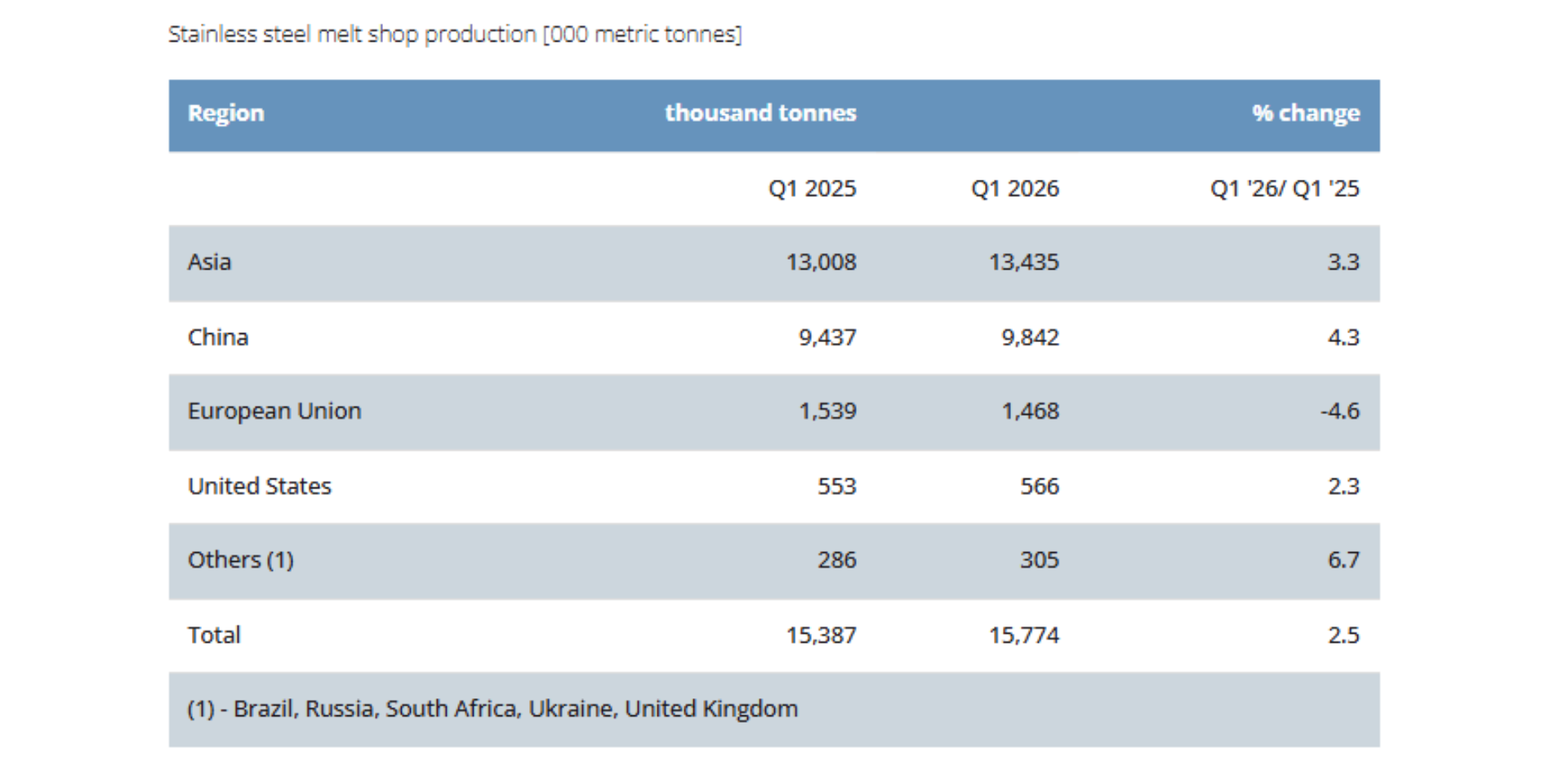
Source: World Stainless
This result indicates that global demand for stainless steel continues to maintain positive growth momentum, despite economic and trade fluctuations in many regions.
Asia Continues to Lead Stainless Steel Production
Asia continues to be the world’s largest stainless steel production region, reaching 13.44 million tons, up 3.3% compared to Q1 2025. Among them, China remains the global stainless steel production hub, recording 9.84 million tons, an increase of 4.3% year-on-year.
This growth reflects strong demand from key industries such as:
- Construction
- Energy
- Food processing
- Chemicals
- Oil and gas
Europe Declines While the U.S. Maintains Growth
The European Union (EU) recorded stainless steel production of 1.47 million tons, down 4.6% compared to Q1 2025. Meanwhile, the United States reached 566 thousand tons, up 2.3%, indicating stable stainless steel demand in the North American market.
Other producing countries such as Brazil, Russia, South Africa, Ukraine, and the United Kingdom recorded a combined output of 305 thousand tons, an increase of 6.7%.
What Is Driving Stainless Steel Demand?
The growth of the stainless steel industry in recent years has been driven by several key factors. Increasing investment in infrastructure across many countries continues to boost demand for durable and corrosion-resistant materials. In addition, the rapid expansion of renewable energy projects, such as wind and solar power, has further contributed to the global consumption of stainless steel.
In industries such as food processing, pharmaceuticals, chemicals, and oil and gas, stainless steel remains the preferred material due to its excellent corrosion resistance in harsh environments. At the same time, the global shift toward sustainability and the use of recyclable materials is making stainless steel even more attractive. With its outstanding durability, long service life, and nearly 100% recyclability, stainless steel continues to affirm its role as a vital material in modern industrial applications.
Stainless Steel Market Outlook for 2026
Based on Q1 results, the global stainless steel market is expected to maintain steady growth throughout 2026. Key products such as stainless steel 304, stainless steel 316, industrial stainless steel pipes, stainless steel fittings, and flanges are projected to remain in high demand across various markets.
For manufacturers and distributors, this trend presents a strong opportunity to expand supply capacity, improve product quality, and meet the increasing global demand for stainless steel products.
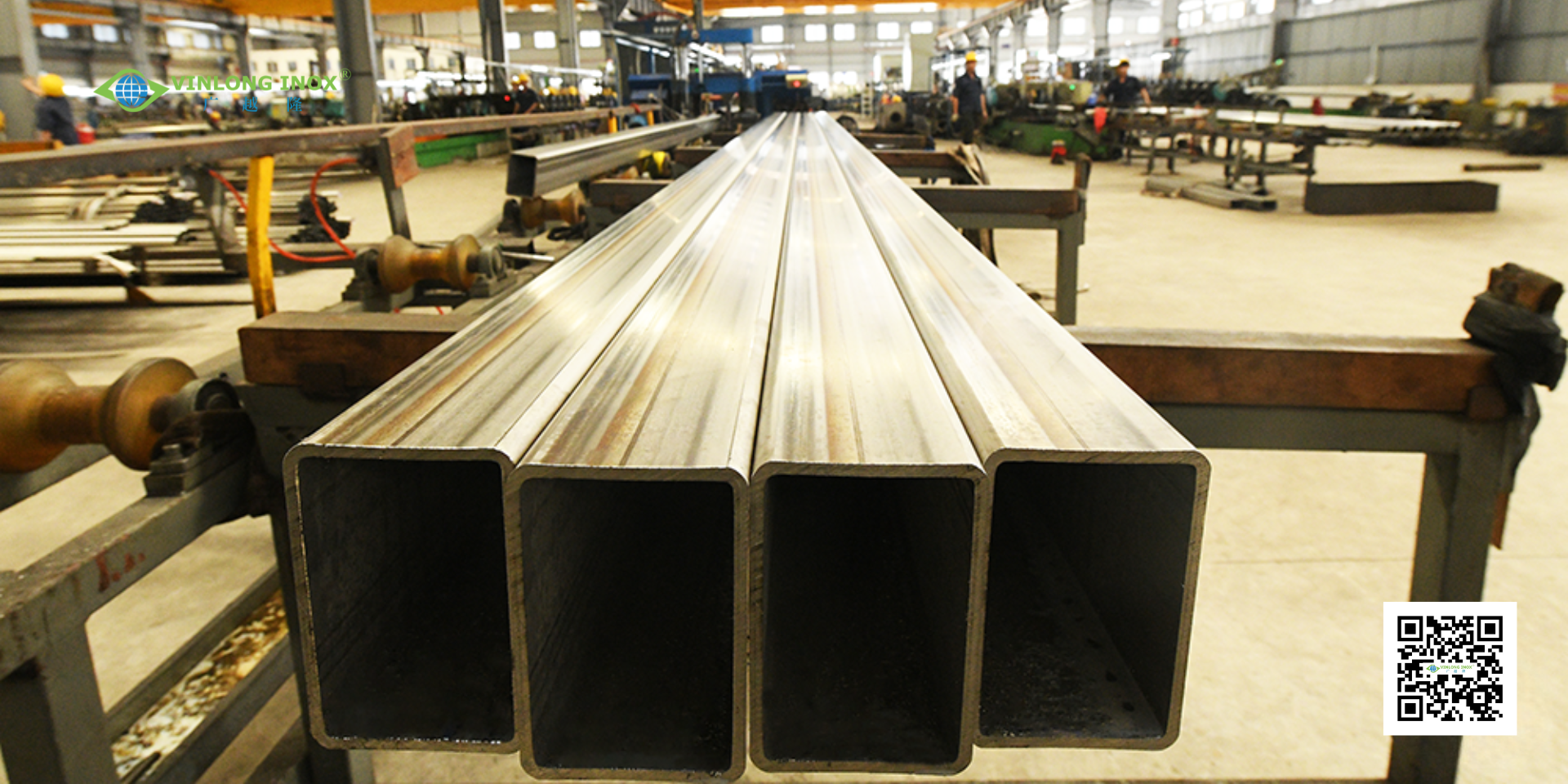
Amid the growing trend of the stainless steel industry, Vinlong Inox is committed to ensuring a stable supply of high-quality stainless steel products, meeting the diverse needs of various industries. Contact us today for expert consultation and support.
Source: Compiled data


Các tin khác
-
Phone:(+84 273) 364 2555
-
Fax:(+84 273) 364 2557
-
Email:info@vinlonginox.com
sales@vinlonginox.com
sales@vinlonginox.vn





CÔNG TY TNHH THÉP KHÔNG GỈ QUẢNG THƯỢNG VIỆT NAM
VINLONG STAINLESS STEEL (VIETNAM) CO., LTD.
TAX ID: 1201462743


